Every November, my English learners come to me with a version of Thanksgiving they picked up somewhere: a cartoon, a coloring page, a hallway bulletin board. Usually it’s a happy meal, some paper feather headbands, and nothing before or after.
Our students deserve better than that. Many of them are new to this country, and many come from places where history is complicated and people remember it differently. They are often very ready for an honest story. They just need it in English they can understand.
Here is how I teach Thanksgiving history to ELLs at every level, and a few things you can try this week without buying anything.
Start with the Wampanoag, not the Mayflower
Most versions of the story begin in 1620 with a ship. That makes the Wampanoag guest stars in their own homeland.
So start earlier. The Wampanoag have lived in what is now southeastern Massachusetts and Rhode Island for thousands of years. They farmed, fished, hunted, and moved with the seasons. They grew corn, beans, and squash together (the “Three Sisters”), and giving thanks for the harvest was already part of their life long before 1621.
And then say this sentence out loud: the Wampanoag are a living Nation today. Two Wampanoag Tribes are federally recognized: the Mashpee Wampanoag Tribe and the Wampanoag Tribe of Gay Head (Aquinnah). Students should leave your class knowing that Native people are not only people of the past.
Tell what happened, using a real source
Here is the short version I give students, adjusted for each grade level:
- 1616–1619: A disease brought by Europeans killed most of the Wampanoag people in the area. The village of Patuxet was almost empty.
- 1620: About 102 English passengers arrived on the Mayflower and built Plymouth where Patuxet had been. About half of them died that first winter.
- March 1621: The Wampanoag leader Ousamequin (also called Massasoit) made an alliance with the colonists. Tisquantum (Squanto), a Patuxet man who had been kidnapped and taken to Europe years before, spoke English and helped them.
- Fall 1621: After the harvest, about 90 Wampanoag men came to Plymouth with Ousamequin. They brought five deer. The gathering lasted about three days.
How do we know? Edward Winslow wrote about it in a letter in December 1621. It is one of the only sources we have. With older students, read a short, simplified piece of that letter together. Primary sources make the point better than a lecture: we know some things, and the colonists didn’t call it “Thanksgiving.”
For middle and high school students, keep going. Thanksgiving didn’t become a national holiday until 1863 (Lincoln, after Sarah Josepha Hale’s long letter campaign), and Congress set the fourth Thursday in 1941. The peace of 1621 did not last: King Philip’s War (1675–1676) was led by Metacom, Ousamequin’s son. And since 1970, many Native people have gathered in Plymouth on Thanksgiving Day for a National Day of Mourning. Teens can handle these perspectives, and they often have the most to say.
4 tips you can use this week
1. Pre-teach 8–12 words with pictures. Choose words like harvest, Wampanoag, colony, Pilgrims, feast, crops, tradition, thankful. Show one picture per word, say it, have students repeat it, then use it in a short sentence: “The Wampanoag grew corn.” Put the words on the wall for the whole week.
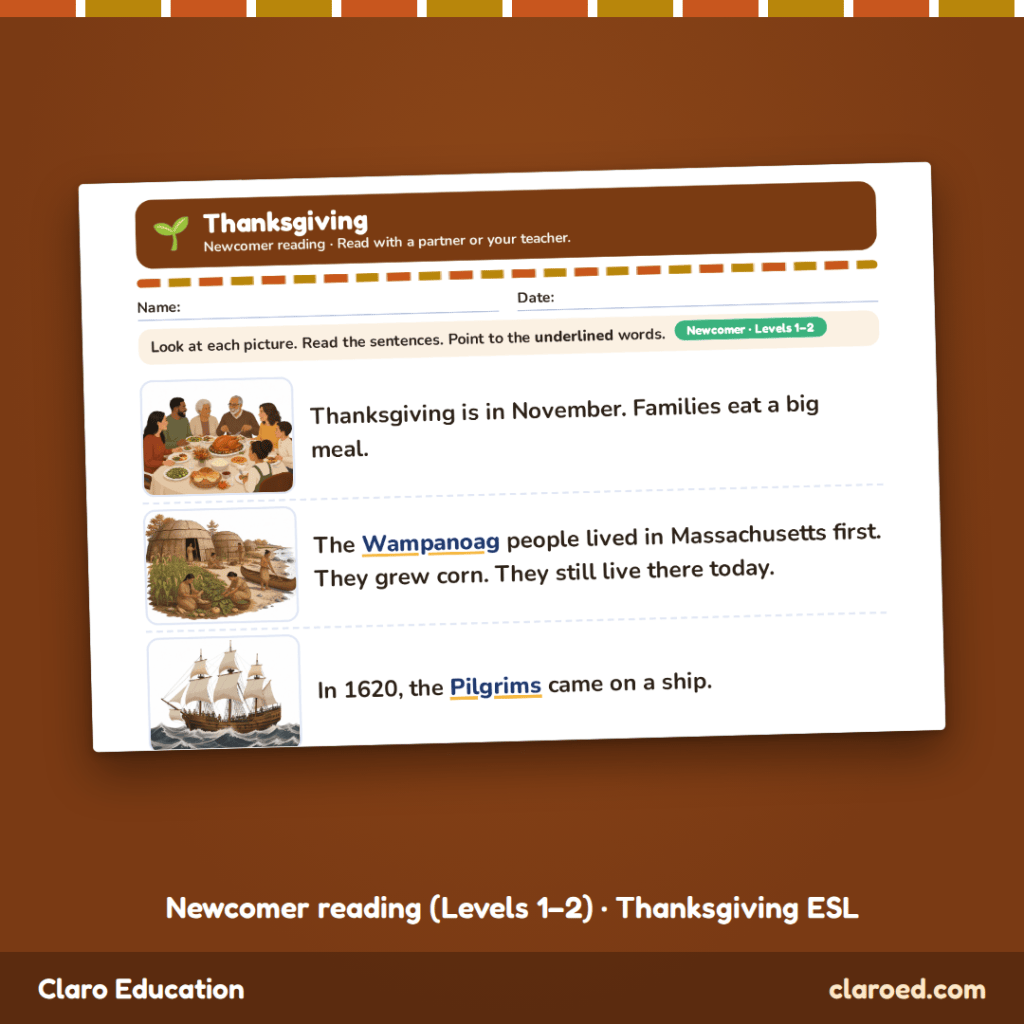
2. Give newcomers the same history in shorter sentences. Don’t send newcomers to a coloring page while the class learns history. Write five or six short sentences, each with a picture: “The Wampanoag lived here first. In 1620, the Pilgrims came on a ship. The first winter was hard. The Wampanoag helped them grow corn. In 1621, they ate together for three days.” Underline the key words. Newcomers can point, repeat, and answer yes/no questions while the rest of the class reads the longer text.
3. Skip the costumes and role-plays. No paper headbands, no “Pilgrims and Indians” dress-up, no acting out Native people. Use real images and real names instead. This is easy to change, and it matters a lot to Native families.
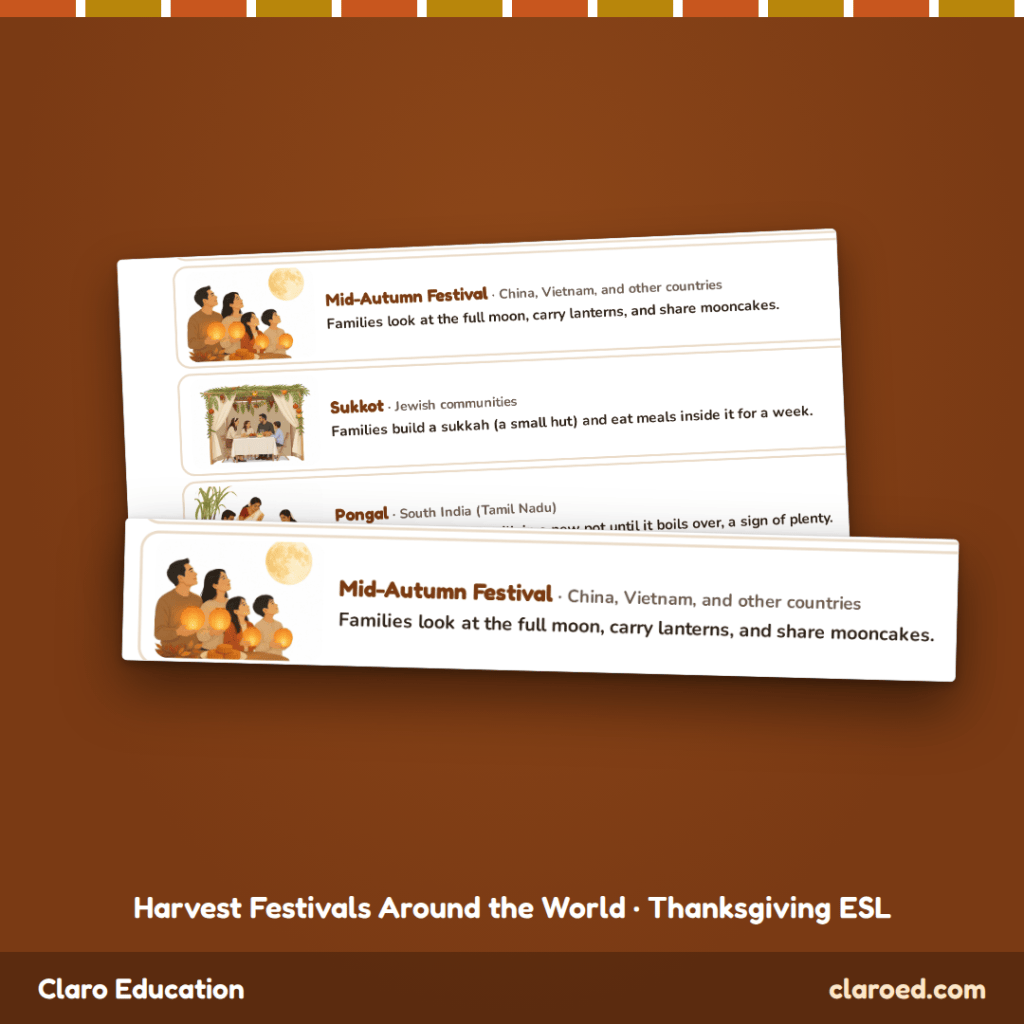
4. Connect to harvest festivals students already know. Many cultures give thanks for the harvest: Chuseok in Korea, the Mid-Autumn Festival in China and Vietnam, Pongal in South India, Sukkot in Jewish tradition, and New Yam Festivals in West Africa. Ask: “Does your family have a harvest holiday? What do you do?” Students who’ve been quiet all week will often light up here. Give them a frame: “In my family, we celebrate ___. We ___.”
End with gratitude, carefully
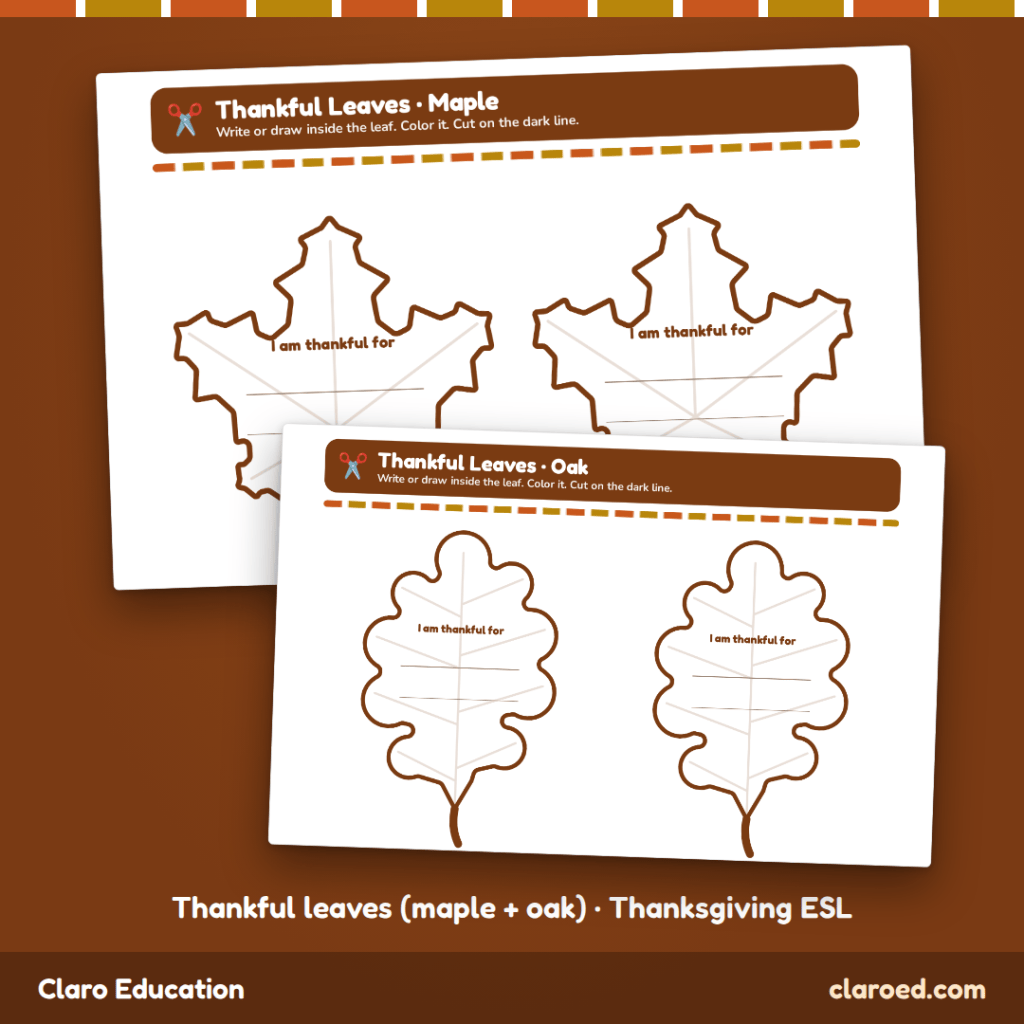
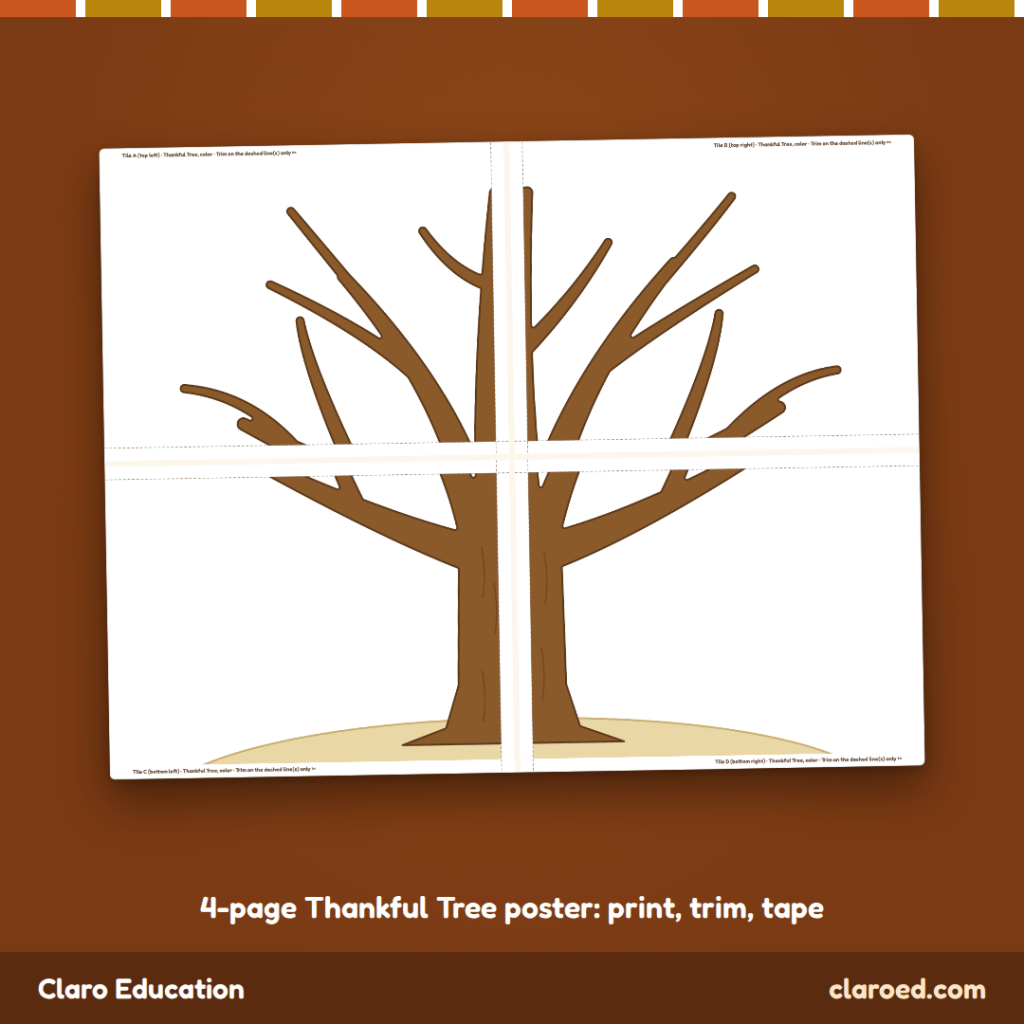
I like to close the week with a class Thankful Tree. Each student writes “I am thankful for ___ because ___” on a paper leaf, reads it aloud, and tapes it to a tree on the wall. Newcomers can draw and label one word. That counts.
Two cautions. Keep “thankful” open: people, places, things, ideas. Don’t ask what or how much students will eat. And let anyone pass. Some of our students have lost a home, a country, or a family member, and this can be a hard question. Some families don’t celebrate Thanksgiving at all, and for many Native people it’s a day of mourning. Make every way of feeling about the day welcome.
If you want it ready to go
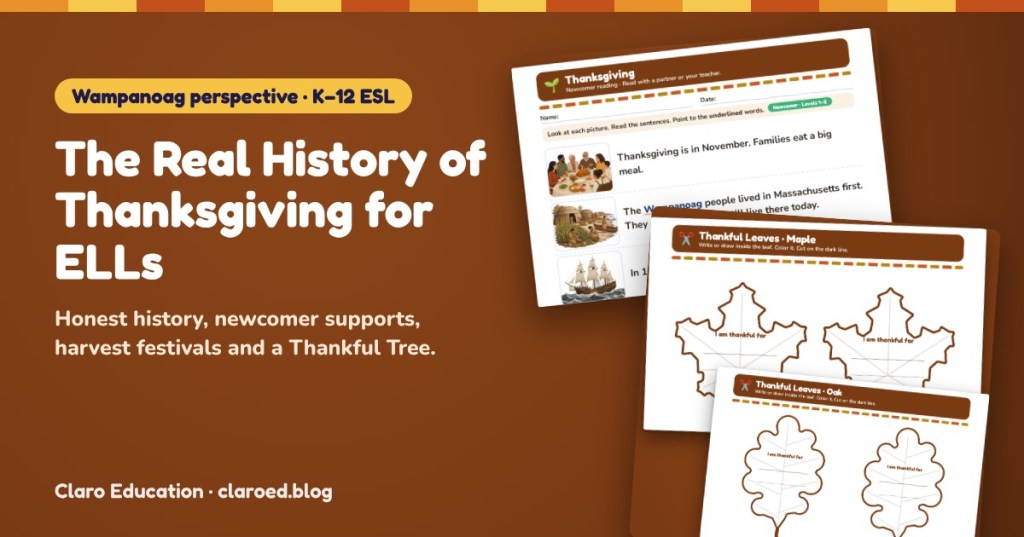
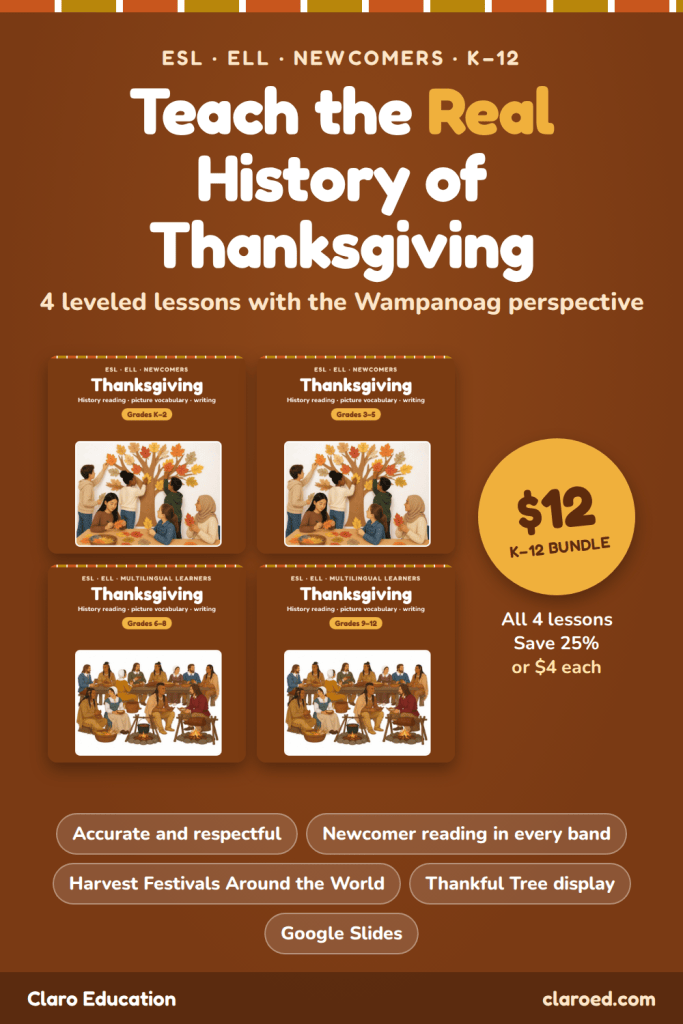
I put all of this into Thanksgiving History ESL lessons for four grade bands. Each one has a leveled reading with the Wampanoag perspective, picture vocabulary, a newcomer reading for Levels 1–2, comprehension questions with a key, a Harvest Festivals Around the World page, writing frames for every level, lesson slides with teacher talk, and a Google Slides version. Every lesson also includes the Thankful Tree display: a 4-page printable tree poster, maple and oak leaves, and a “We Are Thankful” banner.
- Grades K–2 ($4)
- Grades 3–5 ($4)
- Grades 6–8 ($4)
- Grades 9–12 ($4)
- K–12 Bundle, all four ($12)
Thanksgiving is Thursday, November 26 this year. Whatever you use, I hope your students leave with a truer story, and with a few new words to tell it.
Facts in this post were checked against the Pilgrim Hall Museum, Plimoth Patuxet Museums, and Edward Winslow’s 1621 letter.


Leave a Reply